Home Blog Page 7

Giza Plateau – Home of the Last Standing Wonder

0

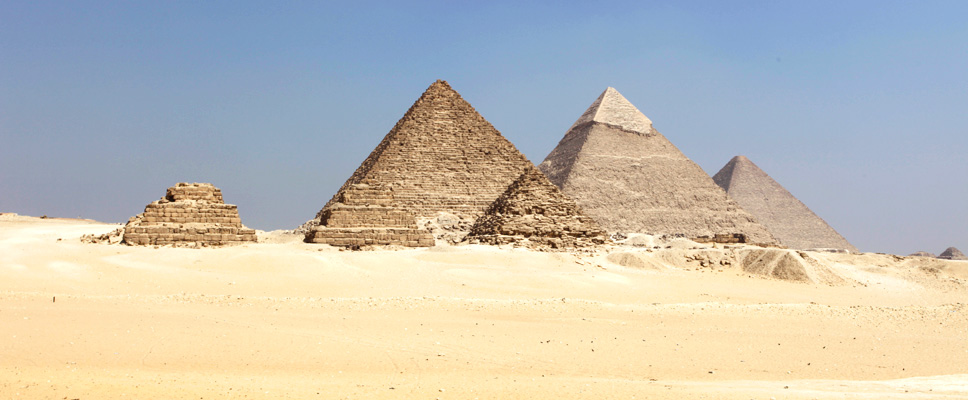
Located just outside of the outskirts of Cairo on the esplanade known as the Giza Plateau, the Great Pyramids of Giza is the must-see Ancient Egyptian landmark.

Known as Khufu’s Pyramid, it is the greatest pyramid of the complex: a truly overwhelming sight. Being one of the seven wonders of the ancient world, it is the only one still standing to this day! When gazing at this colossal structure, there’s no way to escape the feeling of being dwarfed…
The two smaller – but still huge – pyramids in Giza are those of Khafre and Menkaure. A few steps to the east you will notice three small (20 m high) piles of rumble: the queens’ pyramids, tombs of Khufu’s wives and sisters.

Nearby, on the Giza Plateau, you’ll also find the Great Sphinx and the Solar Boat Museum. The site is also where the Sound & Light Show at Giza takes place, and where every newcomer to Egypt experiences Giza camel rides for the first time.

Tivoli is the world’s second oldest Amusement Park

0

Tivoli is a must for all children and those who like to play. Tivoli is located just a few minutes walk from City Hall, and with the Central Station as its nearest neighbor it is very easy to get to.

Tivoli is the world’s second oldest amusement park and is one of Copenhagen’s most famous attractions. Tivoli is filles with wild rides, green oases, gourmet food, and rock concerts – and much more.

The rides
The Demon, the Golden Tower and Vertigo can challenge the big, while The Flying Trunk, The Little Aviator and Veteran cars are a hit with the kids. All 29 rides opens 11.30.

The old amusement park is from 1843 and is a garden full of tradition. At Tivoli there is something for everyone. The garden is not only full with rides and adventures, but can also offer a calm and relaxed atmosphere. Here you will find green areas, lakes, fountains and beautiful flowers.

Tivoli has three outdoor scenes, with lots of live music – both Danish and international artists. Every Friday throughout the summer season there is Friday Rock at the lawn.

In Tivoli you can also experience the Tivoli Gardens parade through the park or watch a performance in the Pantomime theatre. Petzi walks around the garden every day to greet children of all ages.

Autumn and christmas
Every year at the autumn holiday Tivoli is transformed into an enchanted autumn universe full of witches, pumpkins and lanterns. All rides are running as they do from the middle of November and throughout December, where Christmas in Tivoli opens its doors.

Fireworks
Fireworks is an old tradition in Tivoli. On special occasions, such as the opening and closing of the Summer season and on Tivoli’s birthday on August 15th you can experience the beautiful fireworks. There are also fireworks on selected days during the summer season. Between Christmas and New Year there is the Tivoli fireworks festival with fireworks everyday.

Protecting cultural and natural heritage of universal value

0

From the medieval Old Town of Berne to the futuristic city of Brasilia, from the tiny convent of Müstair to the imposing cathedral of Chartres, from the fertile terraced vineyards of Lavaux to the vast desert of Ténéré – all have one thing in common: they are UNESCO World Heritage Sites. UNESCO designates outstanding cultural achievements and unique natural phenomena that are of exceptional universal value and entrusts humanity with their protection and preservation. There are currently 890 such sites on the UNESCO World Heritage List.

UNESCO and its successful World Heritage Convention

UNESCO is the Educational, Scientific and Cultural Organisation of the United Nations (UN). The UNESCO campaign in 1960 to save the Temples of Abu Simbel from the rising waters of the Nile during the construction of the Aswan Dam was the first step towards the “Convention concerning the Protection of World Cultural and Natural Heritage”. At the heart of this Convention is the revolutionary idea that exceptional cultural achievements and unique natural phenomena are not the sole property of the state on whose territory they are found, but belong to all of humanity. As such, the entire citizenry of the world must assume responsibility for their protection and preservation. This notion of universal heritage and its preservation was enshrined in the World Heritage Convention, which UNESCO would adopt in 1972. So far, 185 states have signed the Convention.

World Cultural and Natural Heritage List

Ayers Rock, Grand Canyon, Palace of Versailles, Machu Picchu… these are only a few of the 936 sites that appear on the awe-inspiring UNESCO World Heritage List. The 725 cultural sites include buildings of particular architectural merit, entire towns, and even industrial facilities. The 183 natural sites include, among others, important ecosystems, vestiges of evolutionary history, and nature reserves. 28 of the 936 sites are mixed, i.e. they come under both categories. All signatory states to the Convention may put forward cultural and natural treasures from their country for inclusion on the World Heritage List.

It is a privilege to carry the UNESCO World Heritage symbol and confers great prestige on the sites that hold it. However, it is not granted eternally – UNESCO diligently checks that the necessary steps are continually being taken to preserve the outstanding universal value (integrity and authenticity) of the sites on its World Heritage List. World Heritage Sites which are at threat from decay, major construction projects or wars are placed on the “List of World Heritage in Danger”, and sometimes even withdrawn from the World Heritage List. The last time this happened was in 2009: the site in question was the protected cultural landscape of the Elbe Valley in Dresden. It was struck off the list because of the construction of a new motorway bridge nearby.

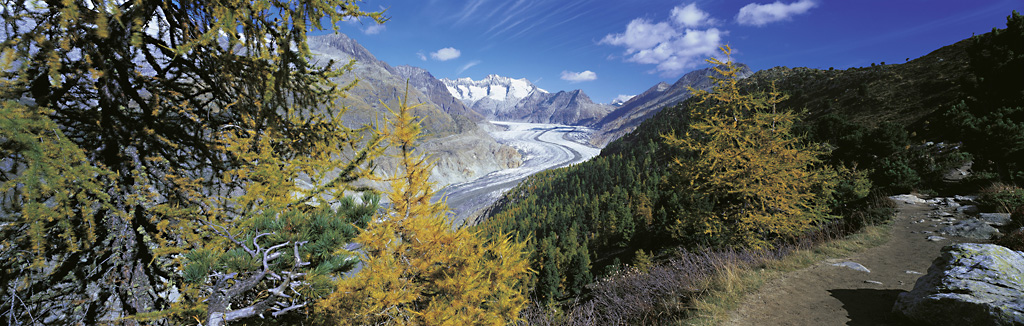
The Baroque cathedral of St. Gallen and its surrounding area have been declared a UNESCO world heritage site.

World Heritage Sites in Switzerland

Switzerland has been a signatory state to the UNESCO World Heritage Convention since it came into force in 1975. Eight years later, the first three Swiss sites were accepted on the UNESCO World Heritage List. It would be almost 20 years before it applied again. Today, the tiny country of Switzerland has 11 UNESCO World Heritage Sites both natural and cultural, and has one application pending.

Australia’s facts

0

Australia’s animals

Australia teems with native animals, many which are found only here.

Our Landscape

A wide, brown land
Australia is the sixth largest country in the world. It’s about the same size as the 48 mainland states of the USA and 50 per cent larger than Europe, but has the lowest population density in the world – only two people per square kilometre.

Beach paradise
Australia’s coastline stretches almost 50,000 kilometres and is linked by over 10,000 beaches, more than any other country in the world. More than 85 per cent of Australians live within 50 kilometres of the coast, making it an integral part of our laid-back lifestyle.

Our island home
Australia is the only nation to govern an entire continent and its outlying islands. The mainland is the largest island and the world’s smallest, flattest continent.

Our exports

Opals in our eyes
Australia produces 95 per cent of the world’s precious opals and 99 per cent of its black opals. The world’s opal capital is the quirky underground town of Coober Pedy in South Australia. The world’s largest opal, weighing 5.27 kilograms, was found here in 1990.

Gold galore
Kalgoorlie in Western Australia is Australia’s largest producer of gold. It also embraces the world’s largest political electorate, covering a mammoth 2.2 million square kilometres.

Merinos and cattle calls
Australia’s 85.7 million sheep (mostly merinos) produce most of the world’s wool. With 25.4 million head of cattle, Australia is also the world’s largest exporter of beef.

Our Record-Breakers

Natural legends
Queensland’s Great Barrier Reef is home to the world’s largest oyster, weighing up to 3 kilograms, while the world’s longest earthworm, stretching up to 4 metres, is found in Gippsland in Victoria. The heaviest crab, weighing up to 14 kilograms, is found in Bass Strait near Tasmania. Australia’s tallest mountain is Mt Kosciuszko, which is 2,228 metres above sea level.

Longest road, rail and fence
The world’s longest piece of straight railway track stretches 478 kilometres across South Australia’s vast, treeless Nullarbor Plain. Australia’s longest stretch of straight road – 148 kilometres – is on the Eyre Highway in Western Australia. It’s just a tiny portion of the 2,700 kilometre sealed road that takes travellers from Perth to Adelaide.  The world’s longest continuous fence – the dingo fence – was built to keep sheep safe from Australia’s native dog and runs for 5,531 kilometres through central Queensland and South Australia.

Our Flora and Fauna

A hopping icon
The iconic kangaroo is unique to Australia and one of our most easily recognised mammals. There are an estimated 40 million kangaroos in Australia, more than when Australia was first settled.

Unique wildlife
Australia developed a unique fauna when it broke away from the super-continent Gondwana more than 50 million years ago. Today Australia is home to a wealth of wildlife not found anywhere else in the world. We have around 800 species of birds, half of which are unique to this country. Our marine environments contain more than 4,000 fish varieties and tens of thousands of species of invertebrates, plants and micro-organisms. About 80 per cent of Australia’s southern marine species are found nowhere else in the world.

Flourishing flora
Australia also supports at least 25,000 species of plants, compared to 17,500 in Europe. That includes living fossils like the Wollemi pine and the grass tree, and brilliant wildflowers. There are over 12,000 species in Western Australia alone!

Our People and Culture

An ethnic melting pot
Since 1945 more than six million people from across the world have come to Australia to live. Today, more than 20 per cent of Australians are foreign born and more than 40 per cent are of mixed cultural origin. In our homes we speak 226 languages – after English, the most popular are Italian, Greek, Cantonese and Arabic.

Big country, big ideas
Australians invented notepads (1902), the surf lifesaving reel (1906), aspirin (1915), the pacemaker (1926), penicillin (1940) the Hills Hoist clothesline (1946), the plastic disposable syringe (1949), the wine cask (1965), the bionic ear (1978), dual-flush toilet flush (1980) anti-counterfeiting technology for banknotes (1992) and long-wearing contact lenses (1999).

Aboriginal advances
Believed to be the world’s oldest civilization, Aboriginal people have lived and thrived on this continent for more than 50,000 years.  Aboriginal societies made many unique advances long before the Europeans arrived. They invented the aerodynamic boomerang and a type of spear thrower called the woomera. They were also the first society to ground edges on stone cutting tools and the first to use stone tools to grind seeds, everyday tools developed only much later by other societies.

Interesting Facts About India

0

Historically Speaking

Indian history can be roughly divided into the 6 periods of Ancient India, Medieval India, the years of the Company, colonial times as part of The Raj, the struggle for Independence and finally, post-Independence. India, the geopolitical entity as she stands today is a post-Independence phenomenon. It was as recently as “the stroke of the midnight hour” on 15th August 1947 when Nehru pronounced her “tryst with destiny” that India woke “to life and freedom”.

One of man’s oldest civilizations was the settlement at the Indus Valley. The degree of sophistication that archaeologists found in their settlements almost belies the fact that these people lived almost 4000 years ago. The civilization had meticulously planned cities; streets met at right angles, the sewage system puts present day India to shame, and the tools and large granaries show that they knew more than a thing or two about agriculture. Seals of the Indus Valley have on them the only ancient script that is yet to be deciphered. The most important Indus Valley cities of Harappa and Mohenjodaro are in present day Pakistan.

The civilization died out in the 1500 BC. The reasons are a still a matter of contention and they range from the coming of the central Asian Aryan tribes to the changing of the course of the Indus River. While both these are true, it’s difficult to ascertain that these are what brought the end of the Dravidian civilization in the Indus valley. By 300 BC the previously nomadic Aryans had settled down in the region of north India. They had brought with them Sanskrit, a member of the Indo-European family of languages akin to Latin and Greek. They also brought the spoken literature of the Hindu life-philosophy, horse-driven chariots and a social system of caste differentiation.

The following millennium saw the waxing and waning of empires. In the north the great dynasties were those of the Mauryas (300-200 BC) during which period Buddhism received royal patronage, and the Guptas during whose reign the subcontinent is said to have enjoyed a “golden period” (300-500 AD). The intervening period had new settlers like the Shakas and Kushanas forming lesser kingdoms in the area around the Ganges. The influence of these Aryan kingdoms rarely reached the south. Regional dynasties like the Andhras, Cheras, Pandyas and Cholas ruled kingdoms in the south of the Deccan Plateau and lower down the peninsula. When unable to withstand the pressures of central Asian invaders the Gupta Empire crumbled, the north got divided into strong regional kingdoms (except for a brief period from 606 to 647 under the poet king Harshavardhan). This was the time that the Rajputs grew to prominence in the west.

Within 300 years of being founded in the 7th century, Islam had reached the western parts. But it wasn’t until the coming of Turkish-Afghan raiders like Mahmud of Ghazni (997 to 1030 AD) and Muhammad Ghauri (in 1192) that Islam made significant inroads to the heart of north India. The first Muslim empire was set up by a general of Ghauri’s, Qutb-ud-din Aibak, which is when the Delhi Sultanate came into being. The temptation of privileges extended to the faithful, and Hinduism’s own severe caste system made many convert.

The Delhi Sultanate was ridden with internal strife and saw no less than 5 dynasties come to power between 1206 and 1526. In 1526 a young Central Asian warlord who had already captured Kabul, set his eyes on the vast land that lay to the south. Tales of riches had reached his ears and Babur, descendent of Genghis Khan and Timurlane made good his ancestral legacy by defeating the Sultanate’s armies in the Battle of Panipat.

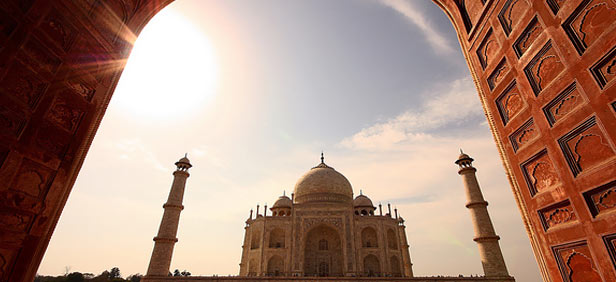
In a land of oppressive heat, and such a variety of people that he could hardly make sense of it, Babur founded the Mughal dynasty. Babur began the work of bringing the delicate patterns of Islamic art, the detailed craft of miniature painting, the severe symmetry of formal garden craft to Delhi. Till Aurangzeb, the 6th king of the dynasty, the Mughals had a liberal policy of religious tolerance and that helped them weave together a largely stable and tight knit kingdom that spanned a larger territory than any previously had. It was a time of plenty and emperors like Jehangir (1605-1627) and Shah Jehan (1628-1657) could focus their attentions on art, architecture and culture. It was the time when the Taj Mahal was built, as was the Red Fort, and the coffers contained the Koh-i-Noor and the ruby and emerald studded Peacock Throne. Aurangzeb’s religious zeal won him widespread resentment. The Mughal Empire began unravelling, unable to withstand the Maratha chieftain Shivaji’s guerrilla warfare. The last really effective Mughal king was Bahadur Shah (1707-1712). After him Mughal power and prestige declined steadily.

The first British East India Company officials landed in India in 1602. Eventually their interests ceased to be purely mercantile as they assumed more political roles. After the Revolt of 1857, the Crown took over the reigns and India officially came to be a part of the vast British Empire. The Raj settled into ruling this vast dominion and did so till in 1947 when the country was handed back to the leaders of the freedom movement. Gandhi and Nehru led the largely non-violent movement from the front with the backing of Congress and the entire nation. However, partly because of the British ‘divide-and-rule’ policy and internal contradictions in the national movement itself, a communal divide came to be. When India finally achieved freedom, it was combined with the trauma of partition and the formation of Pakistan.

Nehru became the first Prime Minister of India on 15th August 1947 at the head of a Congress government. The Congress hegemony ended in the late 60s, but it came to power intermittently through the 70s and 80s. The Nehru legacy was strong enough to make both his daughter Indira (who declared the infamous internal Emergency), and grandson Rajiv, Prime Minister. In the 90s the era of coalition politics had begun and democracy had come of age.

Habitat

From the highest point of the Kanchenjunga peak at 8598 meters to the lowest point at 0 meters at the Indian Ocean, India is the land that spells variety.

The 7th largest country in the world, it covers a total area of 3,287,590 sq km in area. It lies in south Asia jutting into the Indian Ocean in its south, undulating over the frozen wasteland of the Himalayas in the north, braving drought in its desert-like west and surviving fierce floods in its east. A substantial portion of northern India is the fertile plain where the great Gangetic riverine system irrigates vast expanses of the land bringing agrarian well being. The Deccan Plateau in Central India is rich in minerals. The Western and Eastern Ghats fringe the southern peninsula and are the setting for coffee, tea, cashew plantations, the Nilgiri langur and gaur, and the silversmith Toda tribal.

In the north-west, Pakistan borders India, and to the east lie China, Nepal, Burma, Bhutan and Bangladesh. To the south lies the teardrop shaped island nation of Sri Lanka. Beyond the peninsula the waters of the Bay of Bengal in the east, the Arabian Sea in the west and the Indian Ocean at the very south wet the shores of India’s 7000 km long coastline. Great vanquishing rivers are worshipped. The Narmada, Godavari, Krishna, Cauveri, the Brahmaputra, Ganga and Yamuna criss-cross the terrain bringing prosperity and fertility and often wreaking havoc in flood. They inspire songs and they bring misery; increasingly they are bringing hydroelectric power to millions across the country.

The Tropic of Cancer splits India in half. Sub tropical jungles house the Royal Bengal tiger, multiple species of deer and antelope, the Asian elephant, the Common, Golden and Nilgiri langurs, the one horned rhino in the forests of Assam, prides of Asiatic lions in the dry wilds of Sasan Gir in the west. And there is much more: river dolphins in the Ganges and Brahmaputra, crocodiles, waters that are teeming with mahseer, trout, carp, fresh water prawns, woods with fishing cat, civets, leopard, the cobra, krait and python, the grey mongoose, the gaur, the sloth bear.

There are over 1200 bird species including the Great Indian Bustard, the Malabar hornbill, Paradise Flycatcher, cormorants, egrets, darters and migratory Siberian cranes in the winter. India’s jungles, rivers, streams are simply bursting with wildlife, much of it protected in her 80 National Parks and 441 Sanctuaries. Camels in the deserts of Rajasthan, stoic yaks, sure-footed Himalayan Tahr and mountain goats in the north extend the scope beyond just that which is typical to Asian sub tropical forests of sal, shisham and teak. There are mangrove forests in the east and evergreen conifers in the upper climes of Himachal Pradesh and Jammu and Kashmir.

Common flowers include roses, bougainvilleas, sunny marigold, water lilies, lotus and fragrant jasmine. In the breathtaking Valley of Flowers a sea of lilies, poppy, daisies, holly, pansy, geranium, zinnia, petunia, fox, caryopsis dianthus, saxifrage and calendula stretches out in the shadow of towering snowbound Himalayan peaks.
Best Time To Visit Kasauli

Located halfway between Kalka and Shimla, Kasauli is a small hill station nestled among the Shivalik Range. The cantonment town, established during British Era, is...

Best Time To Visit Kasauli

Located halfway between Kalka and Shimla, Kasauli is a small hill station nestled among the Shivalik Range. The cantonment town, established during British Era, is...

Churdhar Trek

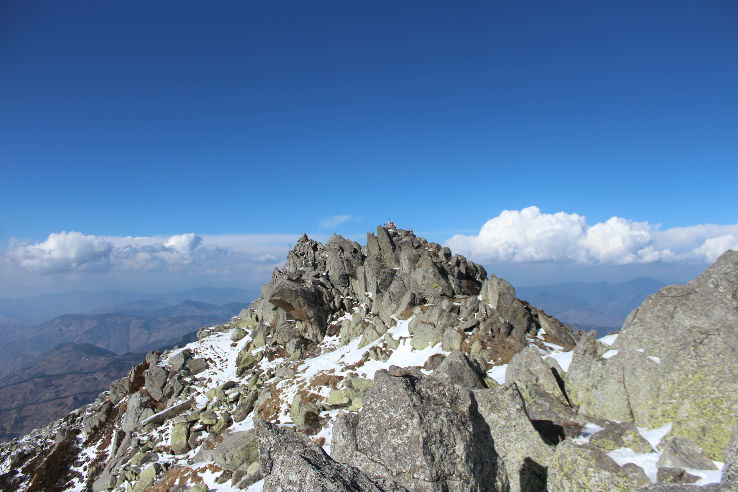
Locals have named Churdhar peak after deity Shri Shirgul Maharaj or Chureshwar Maharaj who used to live here in ancient times. Churdhar at 3655 metres...

KANAMO PEAK TREK

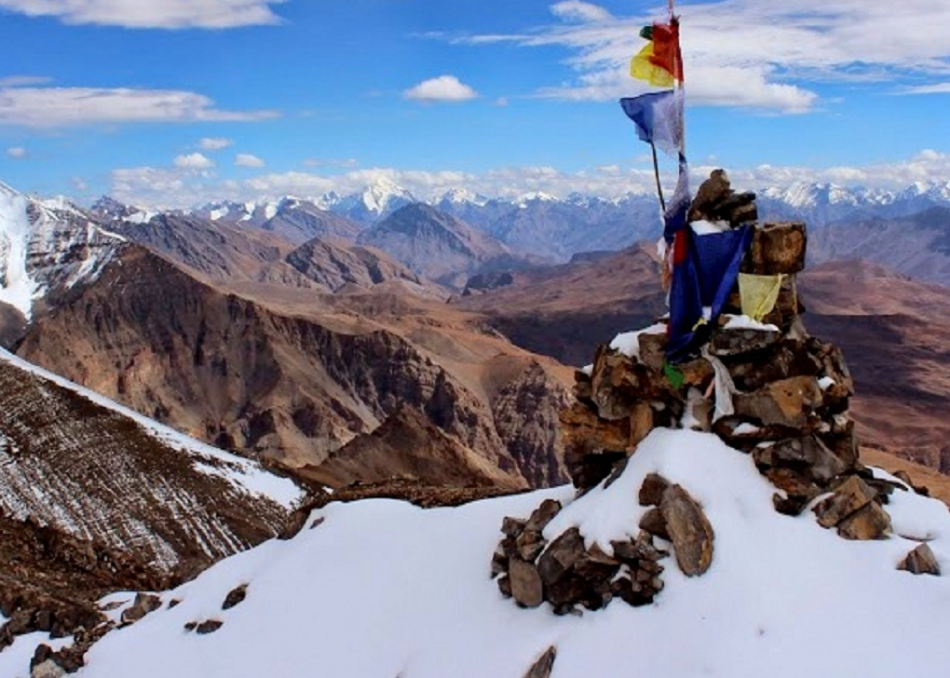
The Kanamo Peak Trekisfabulous and probably the best way for one to experience a climb to 6000m in India. It is of a relatively short...

Amazing Places to Visit in Himachal Pradesh in Winter.

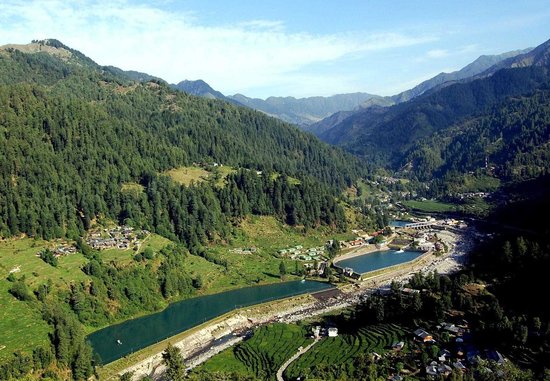
Winter is the best season to travel to Himachal and experience the breathtaking scenes of valleys, snow capped mountains, frozen lakes and also to...

Parashar Lake Trek – Himachal Pradesh

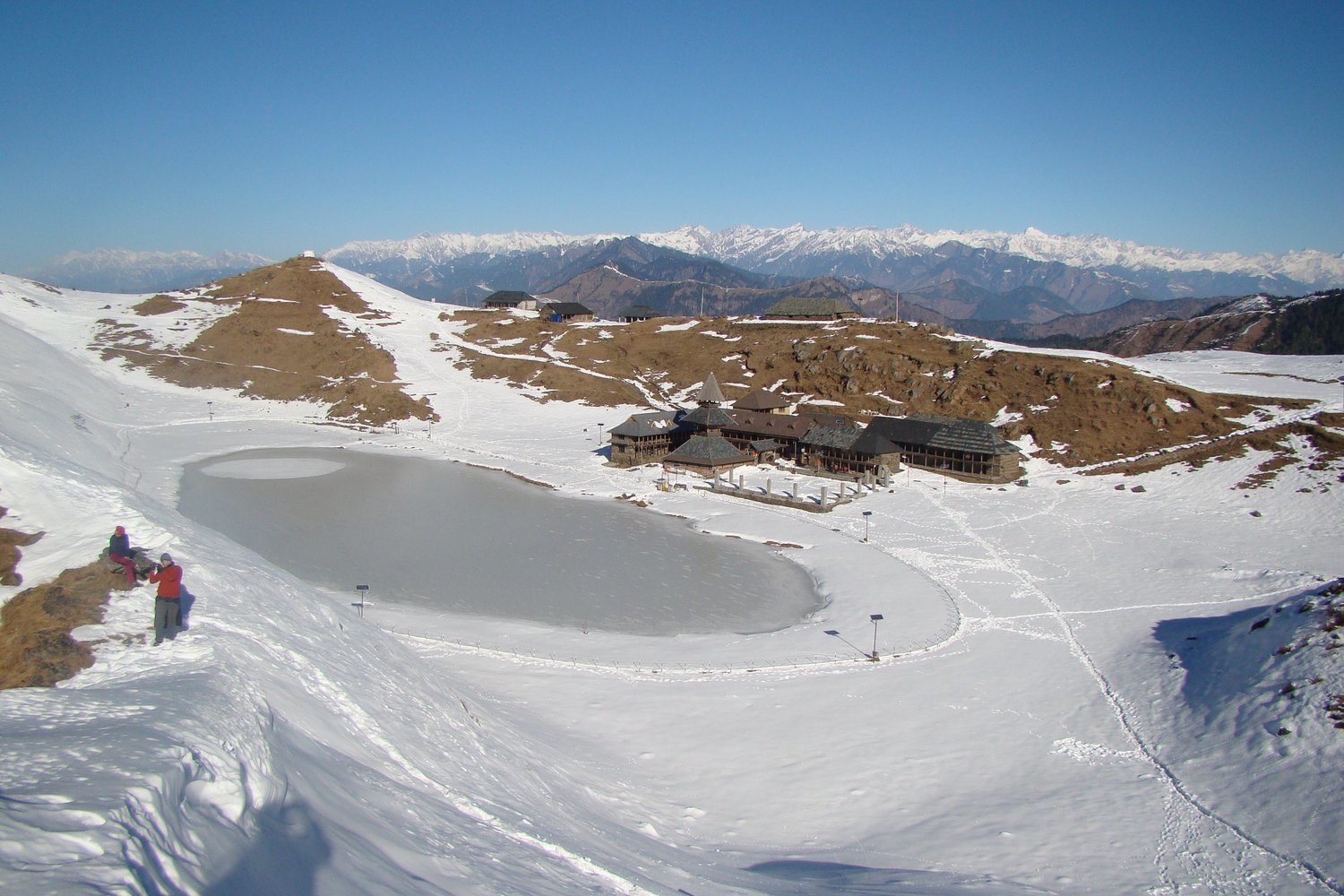
Parashar lake trek is one of the best family adventure weekend getaways near Delhi, in the Kullu valley of Himachal amidst the long and...